

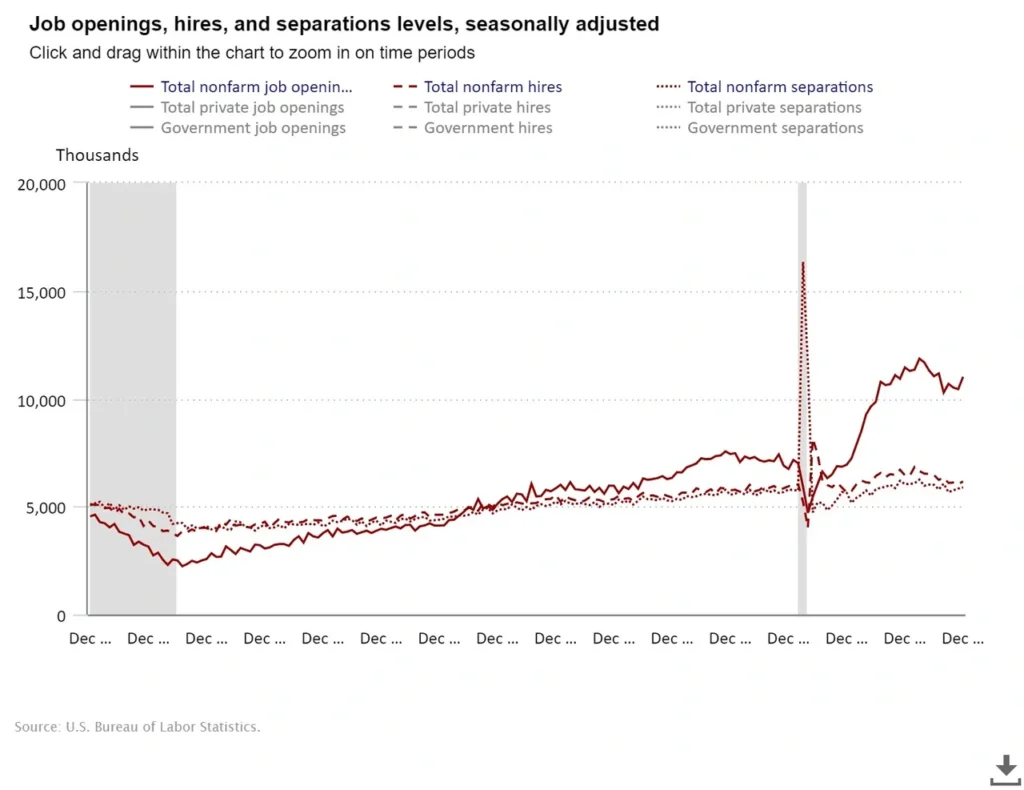
While the economy has been dominating the “uncertainty headlines”, more attention is turning to the question of what to expect in the employment market. With some large employers announcing layoffs, companies are beginning to hope for a reprieve in what has been a very tight talent market. Analysts have been hard pressed to provide definitive predictions. It’s understandable given the breadth and depth of uncertainty across the spectrum. Today we are discussing the current employment market snapshot, what levers are most likely to impact the direction of the employment market, and what you can do now to hire more easily.
Where does the employment market stand now?
February jobs reported a rise of 311,000 in total nonfarm payroll employment which is much higher than anticipated. The unemployment rate changed little with a rise from 3.4 to 3.6 percent. We’re seeing total separations trailing new hires which means it’s difficult to make a dent in the level of monthly job openings hovering at 11,000.
Why is the workforce participation rate going down?
The civilian workforce participation rate has been long projected to continue its decline as the average age in the US climbs and baby boomers retire out of the workforce. Additionally, recovery from the pandemic-related drop, stalled in March 2022 and is wobbling, currently at 62.4%, down from the 63.3% pre-pandemic. Slower population growth, increasing disability claims and increased excess mortality rates are concerning in the compounding effect they may have on the situation.
Will more potential layoffs mean easier hiring?
Some employers are pondering how recent announcements of lay-offs, largely among big companies, might affect availability of talent. A recent article in The Wall Street Journal summarized the announced layoffs from various companies of approximately 130,000 employees collectively. It’s important to realize how out of balance the employment market is. Relative to 11,000,000 open jobs, the amount of talent opened up with these layoffs is very small. Demand greatly exceeds supply, and we are likely to see that continue for some time.
It’s also meaningful to look at the sectors experiencing layoffs:
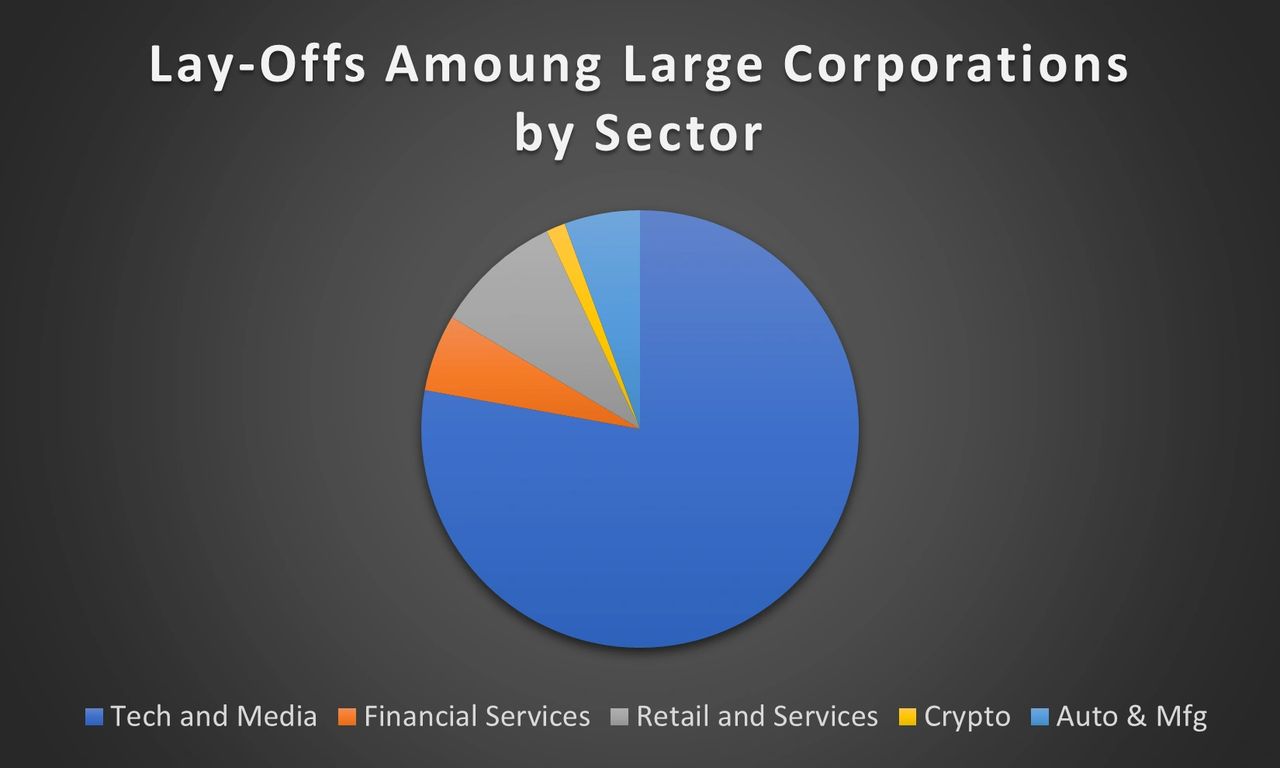
Employers looking to capitalize on newly available talent may look to consider the transferability of these skillsets to their operations.
What will happen with wages?
Wages have been pushed up at an accelerating rate since 2020. According to the Bureau of Labor Statistics, wages and salaries have increased over the last 3 years as follows:
2020- 2.6%
2021- 4.5%
2022- 5.1%
We did see a leveling off begin in the 4th quarter of 2022 signaling that we may be reaching some threshold. From a recruiting standpoint, better compensation ranks #1 for Baby Boomers but only #3 for the Gen Z and Millennial populations. For them, growth opportunity and mental health ranked #1 and #2 respectively. Given the fact that we are in a deep candidate market, it’s very unlikely we will see any downward trend in wages but there is evidence that we may be slowing in the rate of increase.
What can we do to attract talent now?
One piece of encouragement can be found in surveys of employed people completed by CareerBuilder finding 18% of Americans reporting that they are actively seeking a different job and another 26% reporting they are not actively seeking a different job but are open to hearing about new opportunities. There is talent to be tapped, but companies have to be prepared to compete for it. It’s important to understand what is of the greatest importance to employees so you can target your efforts in the most impactful ways. CareerBuilder further reported on the top reasons for voluntarily leaving positions based on generational consideration:
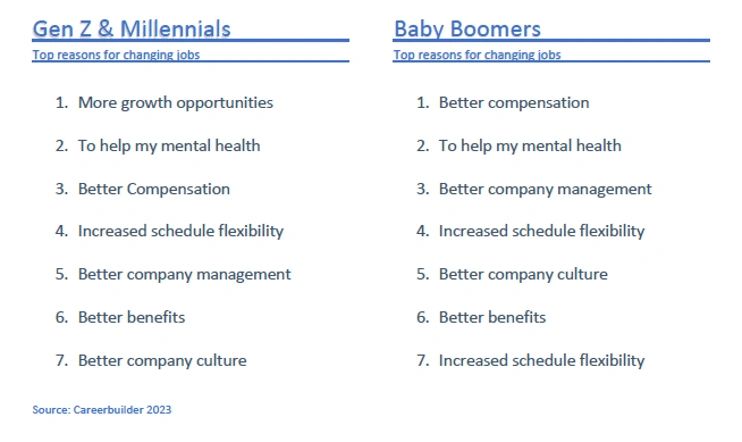
While schedule flexibility may not appear at first glance to be a top tier driver according to employee’s reported rankings, it is notable that 79% of respondents said they felt the ability to work remotely is a necessity. 67% said they would like to work remotely at least 3 days per week and 51% of Millennials say they would quit if they could not work remotely. Remote work and schedule flexibility are likely tied to mental health considerations which is high on the list for both groups. Across the spectrum, employees report feeling happier and more productive when they can work remotely. Additionally, the stress of childcare and eldercare is eased by the flexibility it allows which further helps with mental health.
One of the key recommendations we make to our clients in a highly candidate-driven market is to think carefully about job requirements when you approach the recruiting process. Throughout the last few decades, employers became accustomed to the luxury of a long list of qualifications such as a college degree, prior industry experience, and proficiency with particular technologies. As the employment market has changed, it’s important to consider what is truly necessary and avoid requiring qualifications from applicants that can be gained after you hire them. The burden of acquiring skills has shifted from the candidates to the employers in the last decade and employees expect more training and development from their employers today. Identifying the soft skills required to be successful in a role and training the hard skills will allow you to cast a much wider net in the talent pool. Additionally, the training and development afforded to the employee is a benefit in attracting them and supportive when it comes to retention.
For a more in-depth review of the labor market and actionable steps you can take to ensure you are able to attract and retain the workers you need, join us in our upcoming webinar on March 30, 2023, “Where have the workers gone and what can you do?”. Register here to save your spot.

