

One of the most important aspects in preparing for a job interview is knowing how to answer behavioral questions. When answering any behavioral interview questions, you should be following a simple structure to make sure you’re maximizing your answers and showing the interviewer your full potential. Learn about the most effective response method to use when you’re asked any question that starts with “tell me about a time where…”
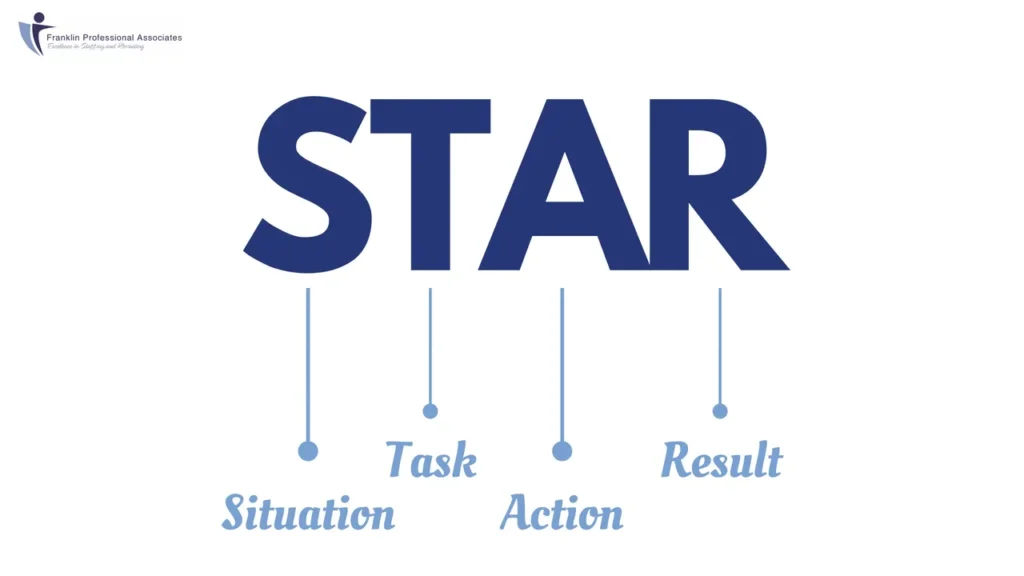
The STAR Method: Situation, Task, Action, Result
Situation: Start off by describing the situation that you’re in to give the interviewer some context. Before you can answer the question and talk about what you accomplished, they should understand the role you were in at the time and what was expected.
Task: After giving the context of the situation, move into recognizing what you needed to do and what was expected of you. Make it clear to the interviewer that you identified the task at hand before you move into how you address it.
Action: This should be the bulk of your answer. Show the interviewer what steps you took to address the situation and use action words to really paint a picture. This is the time to show what a great candidate you are and highlight what you can do in terms of the question they asked.
Result: You should always end your answers with what the positive outcome was due to your actions. This could mean a happy customer or client, or even increasing revenue or making a sale; it all depends on what the task was. Ending on a positive note will show the interviewer the impact you have made in your past roles.
What’s an example of a STAR Response?
As an example, we can answer the question, “tell me about a time when you demonstrated leadership.”
Situation: “A great example of when I demonstrated leadership qualities was at my most recent job at Company XYZ, where I worked as a Marketing Director and had to lead my team of fifteen people in re-designing a sales campaign.”
Task: “As the director, I knew I had to keep my team properly organized and delegate tasks fairly. I wanted to make the team as cohesive as possible and allow everyone to feel comfortable sharing ideas and working together.”
Action: “I hosted weekly meetings with the team and created checkpoints for each member to stay on track. On top of that, I held individual meetings to make sure each member was comfortable with their work and could talk to me if they felt overwhelmed. I also encouraged frequent brainstorming and collaborative exercises to make teammates more comfortable with each other, and to improve campaign ideas.”
“As a result, our team’s sales campaign led our company to have a 20% increase in sales for the quarter. On top of that, our team was praised for having the most creative and organized sales campaign.”
Always make sure that your STAR responses paint a clear picture and incorporate storytelling. By practicing and perfecting this method, you will undoubtedly set yourself apart from other candidates!
Learn how to answer: “what’s your greatest weakness?”
For more tips on all things job search and professional development, check out our Employee Tips or contact us at mglenny@franklinprofessionals.com.

