


Being in staffing for three years, I’ve gained a deep understanding of how the job market shifts—and it shifts more frequently than we think. Every day, new technologies and social media platforms shape the way people view work, changing candidate expectations faster than most companies adapt.
So, what does this mean for hiring? It means that while businesses focus on maintaining their culture and processes, candidates are constantly evolving in what they want from a job.
The Experiment: A Poll on Job Priorities
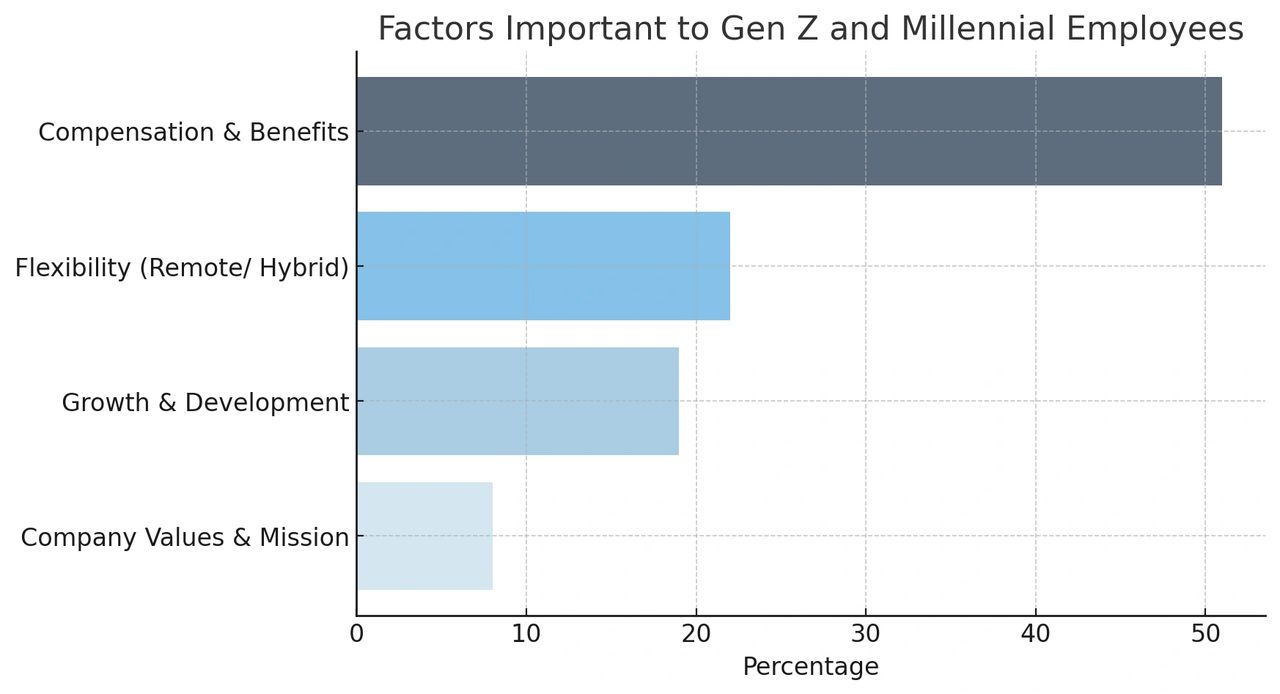
Curious about these shifting priorities, I conducted a poll on Instagram and LinkedIn to gauge what matters most to job seekers today. I collected 100 votes, leveraging Instagram to capture Gen Z perspectives and LinkedIn for Millennial insights.
- Compensation & Benefits
- Career Growth & Development
- Flexibility (Remote or Hybrid Work)
- Company Values & Culture
Before the results came in, I had my own assumptions—I expected flexibility or career growth to take the lead. As a millennial on the Gen Z cusp, I wanted to understand what the up-and-coming workforce values most, especially as they step into leadership roles in the coming years.
The results surprised me…. But did they?
What Matters Most?
Companies love to emphasize culture, career development, and flexibility. But is that enough? Is offering a growth plan or work-life balance truly what seals the deal for candidates today?
When I had conversations about this, I personally leaned toward flexibility—I thought that would be one of the top priorities. But the poll told a different story.
The majority of votes? Compensation & Benefits by a landslide.
Before we jump to conclusions, let’s break this down.
Why Money Talks in 2025
At first glance, it might seem like people only care about money. But that’s not the full picture.
So much has changed in the last 20 years—salaries have increased, but so have the costs of nearly everything else. Let’s take a look:
- In 2005, the average U.S. salary was around $38,000 per year.
- In 2015, the average U.S. salary rose to $47,000 per year. Jumping only $9,000 in 10 years. But take a look at 2015 to 2025…
- In 2025, the average salary has jumped to $64,000—almost double the increase from the prior decade.
While that’s a significant jump, it doesn’t necessarily mean people today are better off. Inflation, housing costs, and the rising cost of living have created a new reality where salary expectations are naturally higher. What was once considered a comfortable wage no longer stretches as far, making fair compensation more important than ever.
But there’s another factor at play: social media.
In today’s world, we see people rapidly climbing the ladder, making six figures in their 20s, and promoting lifestyles that previous generations didn’t have access to. Exposure to this fuels an expectation that higher salaries are within reach—whether or not the experience level matches.
What This Means for Employers
So, how can companies compete? They can’t just hand out massive salaries to every entry-level hire. But they also can’t ignore market shifts.
One potential solution: performance-based salary growth.
Rather than overpromising or underdelivering, companies should implement clear growth metrics that align with salary expectations. That way, candidates see a real path to the earnings they want, but it’s tied to performance and contribution—not just tenure.
I get it—hiring someone today at the same salary as someone who started a decade ago feels unfair. But fairness isn’t the conversation here. The reality is that the workforce has changed, and businesses that want top talent need to adapt to today’s standards—not the ones from 10 years ago.
What do you think? Are companies keeping up with candidate expectations?

